 English (Australia)
 Dansk
Dansk Deutsch
 English
 English (UK)
 Español
 Francais
 Italiano
 Magyar
 Nederlands
 Norsk
Norsk Polski
 Português (Brasil)
 Pycckui
 Suomi
Suomi Svenska
 עברית
עברית 日本语
日本语 简体中文
简体中文 繁體中文
繁體中文 한국어
한국어
Does cat8 reduce ping?
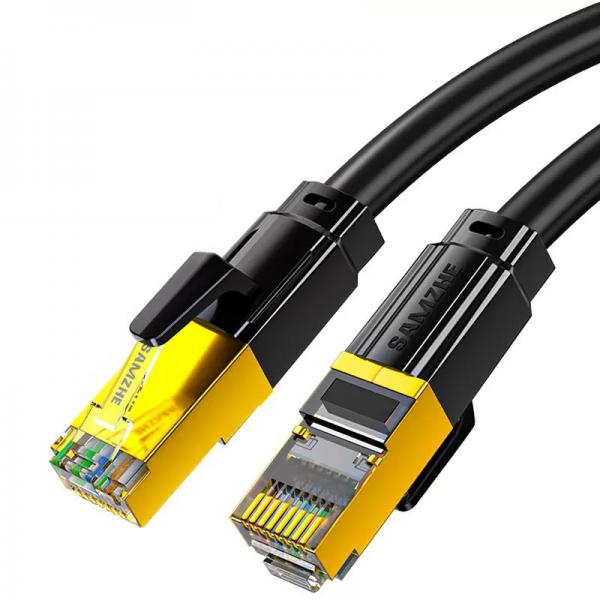
When it comes to gaming or any high-speed internet activity, one of the key concerns for users is latency, commonly referred to as "ping." This is especially true for gamers who rely on quick response times to perform well in their online games. The type of Ethernet cable used in a network setup can indeed influence network performance, including ping times. Cat8 cables, being the latest in Ethernet technology, offer several advantages that can potentially reduce ping. However, it's important to understand how and why this might be the case.
Understanding Ping and Latency
Ping is a measure of the time it takes for a packet of data to travel from your computer to a server on the internet and back again. It is measured in milliseconds (ms). Lower ping times are desirable because they indicate a faster connection, with less delay between sending and receiving data. High ping times can lead to lag, which can be frustrating in any online activity, particularly in gaming.
The Role of Ethernet Cables
Ethernet cables are critical in facilitating a stable and fast internet connection. They connect devices to a network, allowing for data to be transferred. Different categories of Ethernet cables offer varying speeds and capabilities:
- Cat5e: Supports speeds up to 1 Gbps over 100 meters.
- Cat6: Supports speeds up to 10 Gbps over 55 meters.
- Cat6a: Supports speeds up to 10 Gbps over 100 meters.
- Cat7: Supports speeds up to 10 Gbps over 100 meters, with better shielding than Cat6a.
- Cat8: Supports speeds up to 25-40 Gbps over 30 meters, with superior shielding.
How Cat8 Can Reduce Ping
-
Higher Bandwidth: Cat8 cables support significantly higher bandwidths than their predecessors. This means they can handle more data at once, reducing the likelihood of congestion in your network. When a network is congested, it can lead to increased ping times because data packets have to wait longer to be transmitted. By using a Cat8 cable, you reduce the chances of this happening, especially in environments with multiple high-data-demand devices.
-
Improved Shielding: Cat8 cables come with superior shielding compared to earlier categories. This helps in reducing electromagnetic interference (EMI) from other devices and cables, which can cause data packets to be delayed or lost. By minimizing this interference, Cat8 cables can help ensure that data packets reach their destination more quickly and reliably, thus potentially reducing ping.
-
Future-Proofing: While current internet speeds in most homes do not exceed the capabilities of Cat6 or Cat7 cables, adopting Cat8 cables can be seen as a form of future-proofing. As internet speeds continue to increase and more devices are added to home networks, the demand for higher bandwidth and lower latency will grow. Cat8 cables ensure that your network is prepared for these advancements, maintaining low ping times even as demands increase.
-
Shorter Distances: Cat8 cables are designed for shorter runs (up to 30 meters) compared to other categories. This is particularly useful in data centers but can also be beneficial in home networks where devices are relatively close to the router. Shorter cable runs can reduce latency because the data has less distance to travel.
Real-World Considerations
While Cat8 cables offer these advantages, it's important to recognize that they are not a magic solution for reducing ping. Several other factors can influence ping times, including:
-
Internet Service Provider (ISP): The speed and reliability of your internet connection depend heavily on your ISP. Even with the best cabling, a slow or unreliable ISP can lead to high ping times.
-
Network Configuration: The setup of your home network, including the quality of your router and any other networking equipment, can affect latency. A high-quality router with the latest technology can complement the benefits of a Cat8 cable.
-
Server Location: The physical distance between your device and the server you're connecting to can impact ping. The farther away the server, the longer it takes for data to travel back and forth.
-
Network Traffic: The amount of traffic on your network and the wider internet can also affect ping. During peak times, when many people are using the internet, you might experience higher ping times.
Cost and Practicality
Cat8 cables are more expensive than their predecessors, which might make them less appealing for the average home user. However, for those who require the highest possible performance, such as competitive gamers or professionals working with large data transfers, the investment could be worthwhile.
It's also worth noting that to fully benefit from Cat8 cables, all parts of your network should support the same high-speed standards. This includes your router, modem, and any switches or other networking equipment.
Conclusion
In summary, while Cat8 cables can potentially reduce ping by offering higher bandwidth, better shielding, and supporting faster data transfer speeds, they are just one piece of the puzzle. For the best results, they should be used as part of a comprehensive approach to optimizing your network, which includes choosing a reliable ISP, using high-quality networking equipment, and configuring your network for optimal performance. By doing so, you can create an environment where low ping times are more consistently achievable, enhancing your online experience whether you're gaming, streaming, or working from home.


